


Blog List
Understanding Glycemic Load for Better Blood Sugar Control
Understanding Glycemic Load (GL): A Practical Guide to Balancing Indian Meals
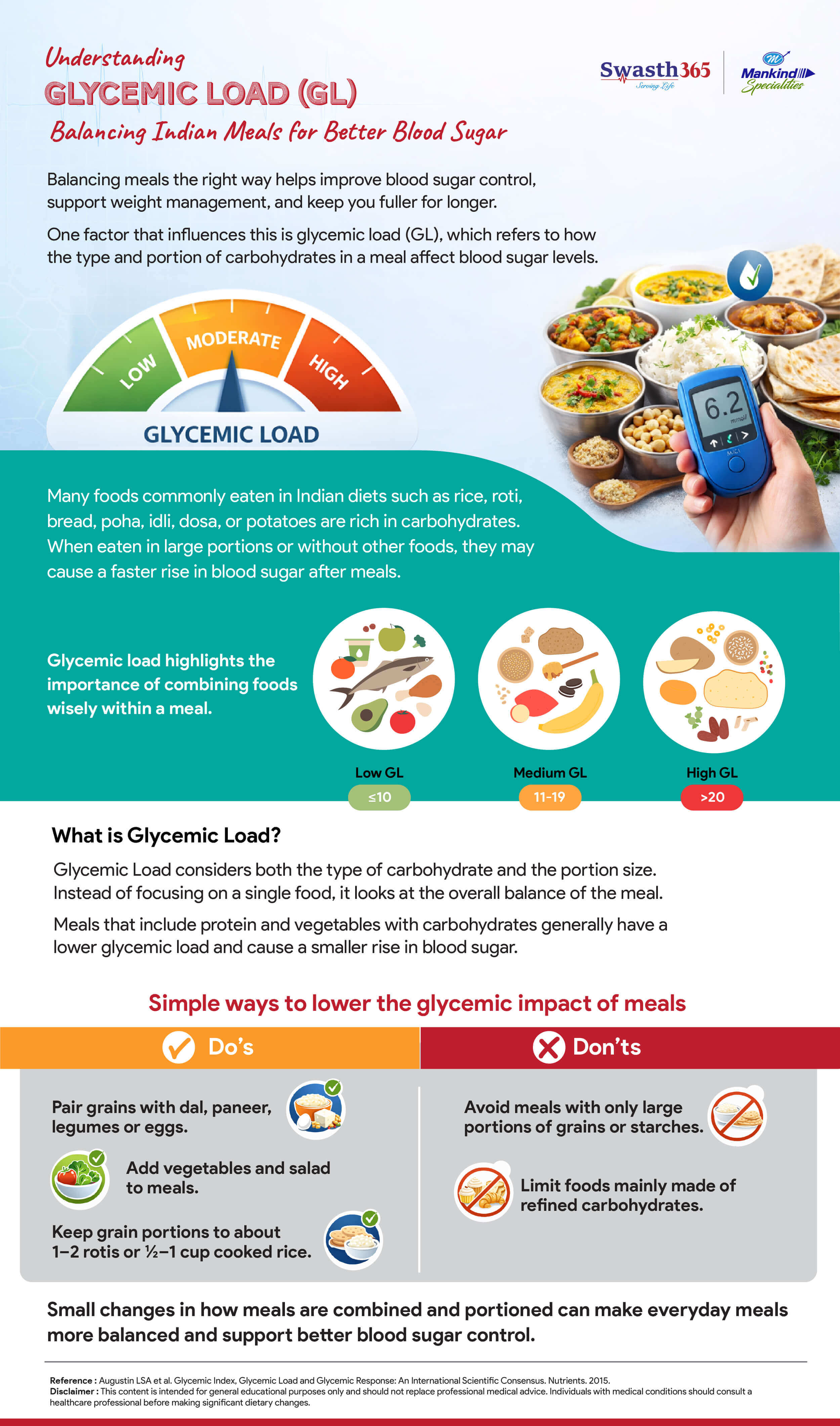
Managing blood sugar isn’t just about avoiding sugar—it’s about how you combine foods. Glycemic Load (GL) helps you understand how your complete meal impacts blood sugar levels.
What is Glycemic Load (GL)?
Glycemic Load considers both the type of carbohydrate and the portion size. It gives a more practical picture of how food affects your blood sugar compared to Glycemic Index (GI).
Simple Meaning: GL tells you how much your blood sugar will rise after eating a meal.
Glycemic Load Categories
- Low GL: ≤ 10
- Medium GL: 11–19
- High GL: ≥ 20
Meals with low GL lead to a slower rise in blood sugar, while high GL meals can cause spikes.
Why It Matters in Indian Diets
Many Indian foods like rice, roti, poha, idli, dosa, and potatoes are high in carbohydrates. When eaten in large portions or without balance, they can increase blood sugar quickly.
The Key Principle: Food Combination
It’s not just what you eat, but how you combine it. Adding protein and fiber helps lower the glycemic impact.
- Protein: dal, paneer, eggs
- Fiber: vegetables, salads
✔ Do’s
- Pair grains with dal, paneer, legumes, or eggs
- Add vegetables and fresh salads
- Control portions (1–2 rotis or ½–1 cup rice)
✖ Don’ts
- Avoid meals with only large portions of grains
- Limit refined carbohydrates (white bread, processed foods)
Practical Example
Instead of: Only rice or roti ❌
Try: Roti + dal + sabzi + salad ✔
Final Thoughts
Small changes in your meal combinations can make a big difference. By managing Glycemic Load, you can maintain stable blood sugar, improve digestion, and stay energized throughout the day.