


High Cholesterol
What is High Cholesterol?
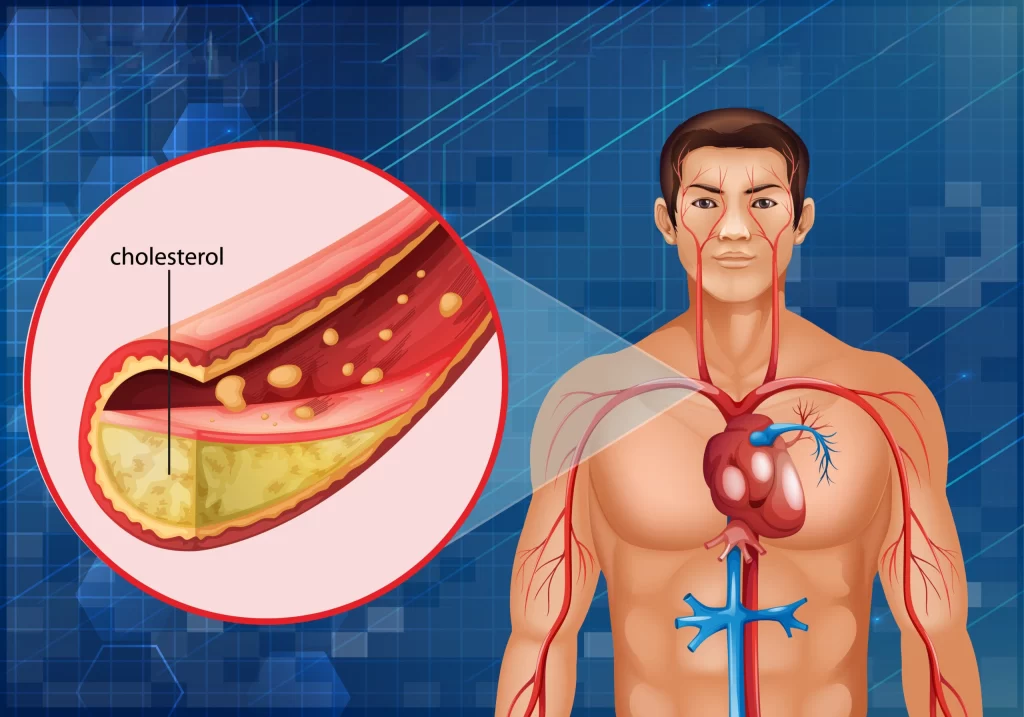
High cholesterol, or high body fat, sometimes called dyslipidaemia, describes unhealthy blood levels of one or more lipids (fats). The “bad” cholesterol is LDL, which can accumulate and form plaque on artery walls, potentially leading to a heart attack.
Calories not immediately burned are converted into triglycerides and stored in fat cells. They are released as energy when needed. However, consuming more calories than you burn can cause triglycerides to accumulate, increasing health risks.
Signs & Symptoms

If you experience symptoms, you may observe that:
high blood pressure
What are the causes for high cholesterol or dyslipidemia?
Smoking cigarettes, being overweight and leading a sedentary lifestyle, eating foods high in saturated and trans-fats, and drinking excessive amounts of alcohol can cause or contribute to elevated triglyceride levels. If one or both of your parents had dyslipidemia, you were more likely to have primary dyslipidemia. A risk factor for elevated cholesterol increases with age. Up until menopause, women often have lower LDL levels than males. Women’s LDL levels start to increase at that point. The following medical issues can also increase your risk of dyslipidemia: chronic renal disease, hypothyroidism, and type 2 diabetes.
What are the complications of high cholesterol or dyslipidemia?
Cholesterol can interact with other chemicals to produce a hard deposit on the inside of your arteries known as plaque if your LDL or HDL levels are too high or too low. Your chance of having a number of health issues, including a stroke and blockages in other blood arteries that feed your limbs and nerves, increases when fatty deposit deposition occurs inside the arterial wall of your blood vessels.
Food For Better Health
Videos List
Diet is an essential part of healthy living ,below you can find regional diet plan that can help you with your Lifestyle modification.