


Immune Thrombocytopenia
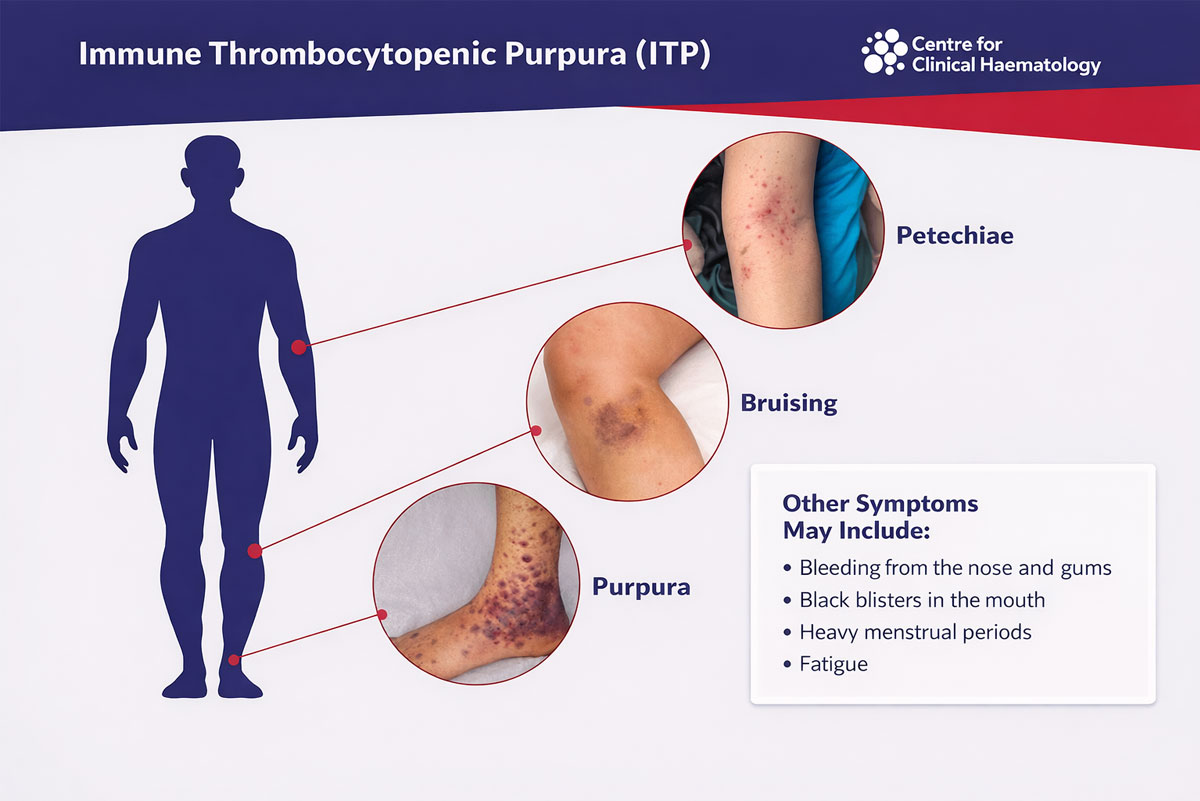
What is ITP?
Immune Thrombocytopenia (ITP) is a blood disorder in which the body’s immune system attacks and destroys its own platelets — the blood cells that help stop bleeding. As a result, the platelet count becomes abnormally low, increasing the risk of bruising, bleeding, and difficulty stopping bleeding from minor injuries.
ITP can be acute (sudden and short-term) or chronic (lasting more than 6 months), and it can occur in both children and adults.
Signs & Symptoms

If you experience symptoms, you may observe that:

Easy bruising (without injury)
Frequent nosebleeds or bleeding gums
Prolonged bleeding from minor cuts
Heavy menstrual bleeding in women
Small red or purple spots on the skin (called petechiae)
Fatigue or weakness
Who Can Get ITP?
- Children: Often develops after a viral infection and usually resolves on its own
- Adults: More commonly chronic, especially in women under 40
- Sometimes associated with autoimmune diseases (like lupus), certain medications, infections (e.g., hepatitis, HIV), or pregnancy
- In many cases, the cause remains unknown (idiopathic)
Tests and Diagnosis
Complete Blood Count (CBC)
Shows low platelet count (usually <100,000/μL)
Red and white blood cell counts are usually normal
Peripheral Blood Smear
Examines blood cells under a microscope to check their appearance
Bone Marrow Test
Rarely needed; may be done in older adults or when diagnosis is uncertain
Additional Tests
To rule out infections (HIV, hepatitis) or autoimmune conditions (like lupus)
In women, pregnancy-related testing may be needed
Food For Better Health
Videos List
Diet is an essential part of healthy living ,below you can find regional diet plan that can help you with your Lifestyle modification.