


Blog List
Is Ghee Good or Bad for Cholesterol? Here’s What You Should Know
Ghee has been part of Indian meals and Ayurveda for centuries — its aroma, taste, and cultural value are unmatched.
In Ayurveda, ghee is considered a “rasayana” food, a rejuvenating and nourishing ingredient that supports digestion, strength, and overall vitality. But in today’s world of cholesterol checks and heart health concerns, many people wonder: is ghee still good for us? Let’s find out what nutrition science says, without losing the essence of tradition.
What Makes Up Ghee
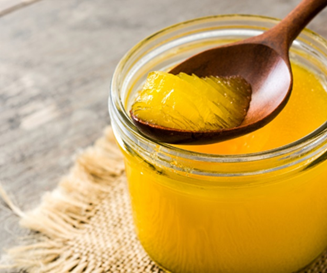
Ghee is made by slowly heating butter to remove milk solids, leaving behind pure fat. It contains mostly saturated fats, a smaller proportion of monounsaturated fats, and fat-soluble vitamins such as A, D, E, and K. It is also lactose free, which makes it easier to digest for those who are sensitive to milk. Because of these properties, ghee holds a special place in both Indian cooking and traditional medicine.
How Ghee Affects Cholesterol and the Heart
The impact of ghee on cholesterol depends mainly on how much you consume and the overall quality of your diet. Too much saturated fat from ghee, butter, or coconut oil can raise LDL (bad) cholesterol, which is linked to a higher risk of heart disease. However, small portions of ghee, when included as part of a balanced diet rich in whole grains, fruits, vegetables, and healthy oils, do not appear to harm most healthy individuals. Global heart health guidelines highlight that replacing some saturated fats with unsaturated fats, such as those in mustard, olive, groundnut (peanut), sunflower, or canola oil, helps lower LDL cholesterol and supports long term cardiovascular health. So, ghee is not something you must completely give up, but it should be used wisely and sparingly.
Practical Tips for Everyday Use
✅ Portion Control: 1 to 2 teaspoons of ghee per day are enough to add flavor without excess fat.
✅ Balance Your Oils: Combine ghee with unsaturated oils such as mustard, olive, groundnut, sunflower, or canola oil in your cooking.
✅ Avoid Deep Frying: Use ghee for finishing dishes or tempering, not for daily frying.
✅ Balance It Right: Include fiber rich foods like dals, whole grains, and vegetables to support healthy fat metabolism.
✅ If You Have High Cholesterol or Heart Disease: Limit ghee intake and prefer unsaturated oils for cooking. Regular lipid monitoring helps assess how your diet is influencing your heart health.
The Bottom Line
Ghee is not inherently good or bad. Its impact depends on how much you use and what the rest of your diet looks like. Think of it as a luxury fat — ideal for flavor and aroma, but not as your main cooking oil. Let most of your daily fats come from heart healthy sources like vegetable oils, nuts, and seeds. When it comes to cholesterol, balance matters more than elimination.
References
- World Health Organization. (2020). Healthy diet: Key facts and recommendations on dietary fats. World Health Organization.
- Hosseinabadi, S. M., et al. (2022). Effects of diets rich in ghee or olive oil on cardiometabolic risk factors in healthy adults: A two-period, crossover, randomized trial. British Journal of Nutrition, 128(9), 1720–1729.
- Kumar, V., et al. (2025). The health benefits of ghee: A comparative analysis of Ayurvedic and modern scientific perspectives — A review. Asian Journal of Dairy and Food Research, 44(1), 1–8.