


Blog List
Epilepsy First Aid: Important Do’s and Don’ts During a Seizure
Epilepsy is a neurological disorder that causes repeated seizures. When someone experiences a seizure, it can be frightening for people around them. However, knowing the correct first aid steps can help keep the person safe and prevent serious injuries.
Many myths exist about how to respond during a seizure. Some people try to force objects into the mouth or restrain the person, which can actually cause harm. Understanding the proper do’s and don’ts can help you respond safely and confidently.
What To Do During an Epileptic Seizure
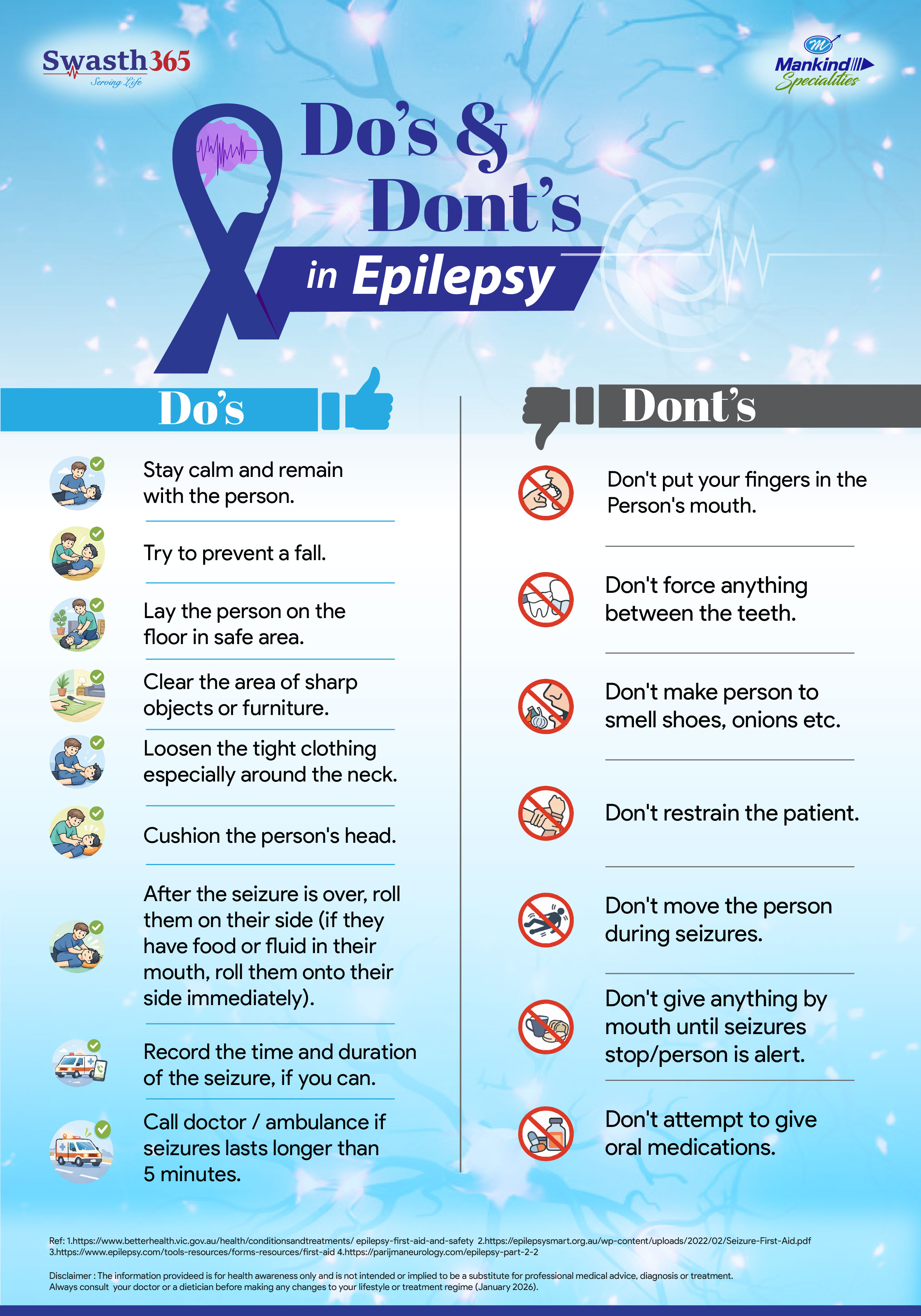
If someone is having a seizure, follow these important steps:
- Stay calm and remain with the person.
- Try to prevent the person from falling or injuring themselves.
- Lay the person on the floor in a safe area.
- Remove sharp or hard objects from around them.
- Loosen tight clothing, especially around the neck.
- Place something soft under the person's head.
- After the seizure stops, gently roll the person onto their side.
- Record the duration of the seizure if possible.
- Call a doctor or ambulance if the seizure lasts longer than 5 minutes.
Most seizures stop on their own within a few minutes. The person may feel confused or tired afterwards, so stay with them until they fully recover.
What Not To Do During a Seizure
Some actions can worsen the situation and should be avoided:
- Do not put your fingers in the person's mouth.
- Do not place objects between their teeth.
- Do not make them smell shoes, onions, or strong odors.
- Do not try to restrain or hold the person down.
- Do not move the person unless they are in danger.
- Do not give food, drink, or medication until the seizure stops.
- Do not attempt to give oral medicines during the seizure.
When Should You Call Emergency Services?
Seek immediate medical help if:
- The seizure lasts longer than 5 minutes.
- The person has repeated seizures.
- The person is injured during the seizure.
- Breathing does not return to normal.
- The seizure occurs in water.
- The person does not regain consciousness.
Conclusion
Knowing how to respond during an epileptic seizure can help protect the person's safety and prevent unnecessary panic. By following these simple first aid steps and avoiding harmful actions, you can provide effective support until the person recovers or medical help arrives.
Increasing awareness about epilepsy can reduce myths and stigma surrounding the condition and ensure that people receive proper care and understanding.
References
1. https://www.betterhealth.vic.gov.au/health/conditionsandtreatments/epilepsy-first-aid-and-safety
2. https://epilepsysmart.org.au/wp-content/uploads/2022/02/Seizure-First-Aid.pdf
3. https://www.epilepsy.com/tools-resources/forms-resources/first-aid
4. https://parijanmneurology.com/epilepsy-part-2
Disclaimer: The information provided is for health awareness only and is not intended or implied to be a substitute for professional medical advice, diagnosis, or treatment. Always consult your doctor or healthcare professional before making any changes to your lifestyle or treatment plan.